Why You Can't Focus on Studying and How to Fix It Fast
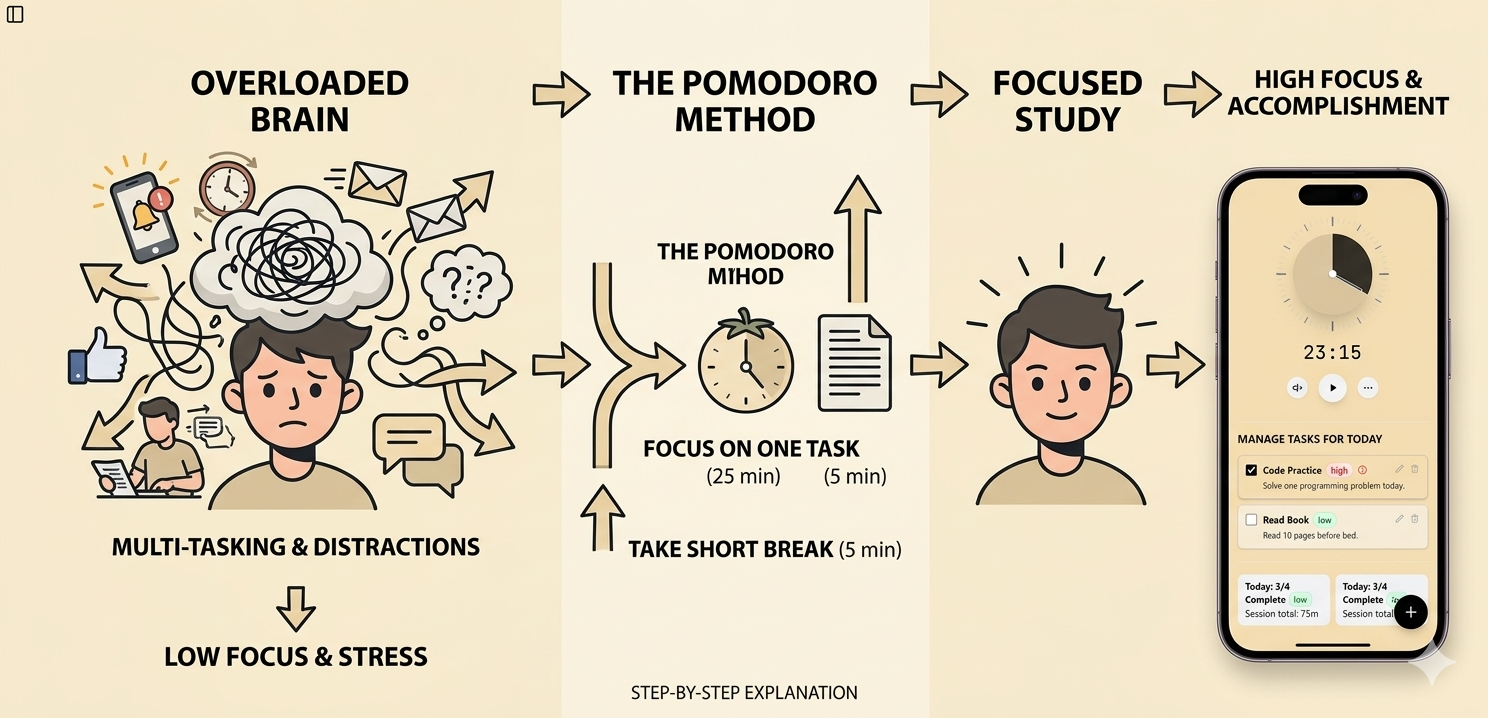
You Are Not Lazy, You Are Overloaded
If your focus keeps collapsing, the cause is usually not laziness. More often, it is a mix of mental overload, unclear direction, sleep debt, and too many distractions competing for attention. When the task feels vague, your brain spends energy deciding what to do instead of actually doing it.
Common Reasons You Cannot Focus
Studying without a plan Using your phone while reading Trying to work too long without breaks Switching subjects constantly Starting while already mentally tired
Fast Fixes That Help Immediately
- Lower the starting pressure
Do not begin with a long promise. Begin with 1
or 15 minutes and let momentum build.
- Use a hard time limit
A timer gives your brain a clear boundary and reduces the feeling that study time is endless.
- Study one thing at a time
Pick one topic and finish one small outcome before moving on. Single-tasking improves comprehension and retention.
- Remove noise before you begin
Close tabs, mute alerts, and clear your desk. The fewer decisions your brain has to make, the more energy remains for learning.
- Write the next action
Do not sit down and ask what should I do first. Write the next exact step before starting.
Better focus example
Open one chapter. Write one goal. Set one timer. Complete one session. Then decide the next step.
FAQ
Q: Why do I lose focus so quickly when studying? A: Usually because the task is too vague, the environment is too noisy, or your brain is already tired. Q: How long should a focus session be? A: Start with 2
minutes or less if you struggle badly, then build up gradually.
Q: How do I improve focus permanently? A: Practice short structured sessions consistently and remove avoidable distractions.
Pomospy helps you stay on track with simple, repeatable focus sessions that are easier to maintain.
Final CTA
Focus is not something you wait for. It is something you build, session by session, until your brain learns the pattern. ⏳