How to Focus on Study for Long Hours Without Getting Tired
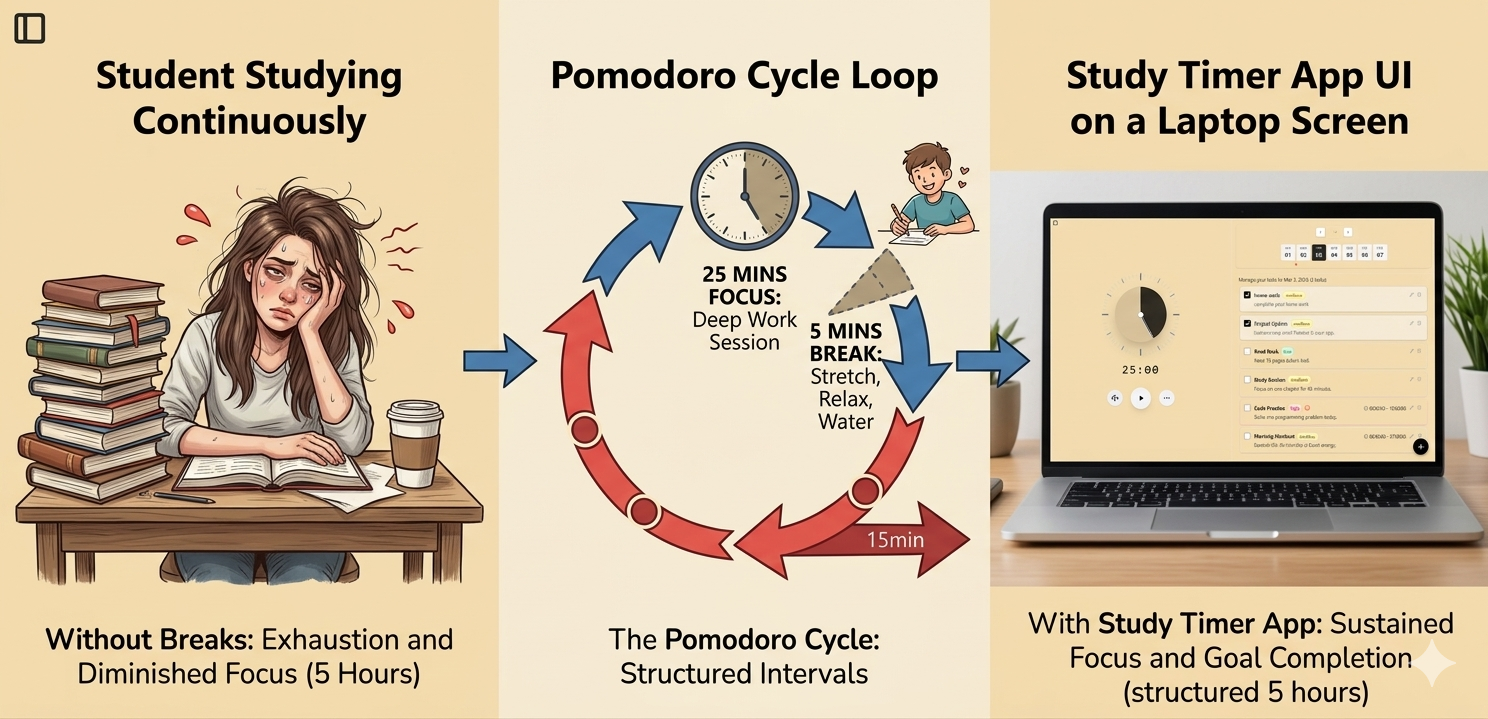
The Truth About Long Study Hours
Long study time sounds productive, but without structure it often becomes exhaustion disguised as effort. What really matters is not how many hours you sit. It is how much real attention you can sustain while you study.
Why You Get Tired So Fast
No breaks Poor structure Too much passive reading Low hydration No movement Trying to push through mental fatigue
A Smarter Way to Study for Longer
- Use cycles instead of marathons
Break your work into cycles that include rest. 2
min study
min break
Repeat
- Choose active breaks
Stand up. Stretch. Walk a little. Look away from the screen. Do not scroll social media during every break.
- Put hard work earlier in the session
Use your freshest energy for the toughest topic. Do the most demanding task before fatigue sets in.
- Keep the environment light and clean
A cluttered space quietly drains concentration over time.
- Track the real study time
Many students think they studied for three hours when only one hour was focused. Tracking reveals the truth.
FAQ
Q: How can I study longer without feeling exhausted? A: Use shorter cycles, take active breaks, and avoid passive scrolling between sessions. Q: Is it bad to study for many hours? A: Not if the work is structured, but long unfocused sessions usually reduce quality. Q: What should I do when my mind feels tired? A: Take a real break, hydrate, and restart with a smaller task.
Pomospy helps you maintain energy through structured focus cycles that are easier to repeat than long, draining sessions.
Final CTA
Do not chase long hours. Chase high-quality focus repeated consistently. 🧩